cosalette
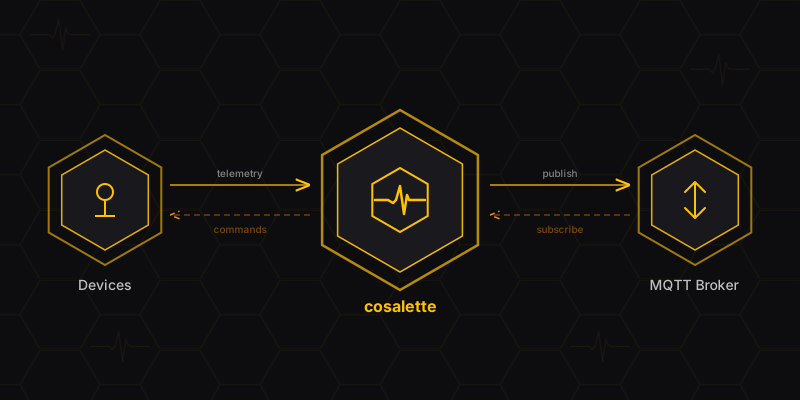
An opinionated Python framework for building IoT-to-MQTT bridge applications.
Think "FastAPI for MQTT daemons."
What is cosalette?
cosalette provides the common infrastructure that every IoT-to-MQTT bridge needs:
- MQTT lifecycle — connection, reconnection, Last Will and Testament
- Device registration — decorator-based API (
@app.command,@app.device,@app.telemetry) - Configuration — pydantic-settings with environment variables and
.envfiles - Structured logging — JSON (NDJSON) for production, text for development
- Error reporting — structured errors published to MQTT topics
- Health monitoring — per-device availability and app-level status with LWT
- CLI —
--dry-run,--version,--log-level,--log-format,--env-file - Testing —
cosalette.testingmodule with pytest fixtures and test doubles
Quick Example
import cosalette

app = cosalette.App(name="sensor2mqtt", version="0.1.0")


@app.telemetry("sensor", interval=30.0)
async def read_sensor() -> dict[str, object]:
    reading = sensor.read()
    return {"temperature": reading.temp, "humidity": reading.humidity}


if __name__ == "__main__":
    app.run()
For production apps with multiple modules, use Router for composition:
# sensors.py
import cosalette

router = cosalette.Router(prefix="sensors")


@router.telemetry("temperature", interval=30)
async def read_temp() -> dict[str, object]:
    return {"celsius": 22.5}


# main.py
import cosalette
from sensors import router

app = cosalette.App(name="sensor2mqtt", version="1.0.0")
app.include_router(router)
# → publishes to: sensor2mqtt/sensors/temperature/state
Explore the Documentation
-
Getting Started
Install cosalette and build your first app in 5 minutes.
-
Concepts
Understand the architecture, design patterns, and ideas behind cosalette.
-
How-To Guides
Step-by-step instructions for common tasks.
-
Reference
API reference, settings, CLI options, and payload schemas.
Architecture Decisions
All major design decisions are documented as Architecture Decision Records.
Status
cosalette is under active development.
Feedback
Was this documentation helpful? We'd love your feedback.